Presentations
Dr. Sammy Ramsey is an engaging science communicator and passionate advocate for bees. He’s been featured on Hulu’s Your Attention Please docuseries, as well as in the Washington Post and New York Times; on NPR, CNN, the Weather Channel, CBS This Morning, Khan Academy, Seeker, Crash Course, and the Today Show; and in countless local news segments across the country. In all of his media appearances and speaking engagements, he’s dedicated to making science more accessible to a broad audience.
Dr. Sammy’s enduring interest in entomology started 25 years ago, and shows no signs of waning. As a second grader, he suffered from a debilitating fear of insects that he conquered by educating himself about them at his local library. He went on to earn a Ph.D. in Entomology at the University of Maryland before completing his post-doctoral training with Dr. Jay Evans, Steve Cook, and Daniel Sonenshine at USDA-ARS Bee Research Laboratory. Today, Dr. Sammy serves as Endowed Professor of Entomology at the University of Colorado Boulder. His nonprofit, the Ramsey Research Foundation, conducts novel research on issues affecting pollinator health around the world.
Interested in booking Dr. Sammy as a speaker? Learn more about his talks and presentations below.
(Note: Unless otherwise indicated, the length of all presentations is 50 minutes.)
Sammy-ana Jones: My Nat Geo Travelogue While I Work to Save the Bees
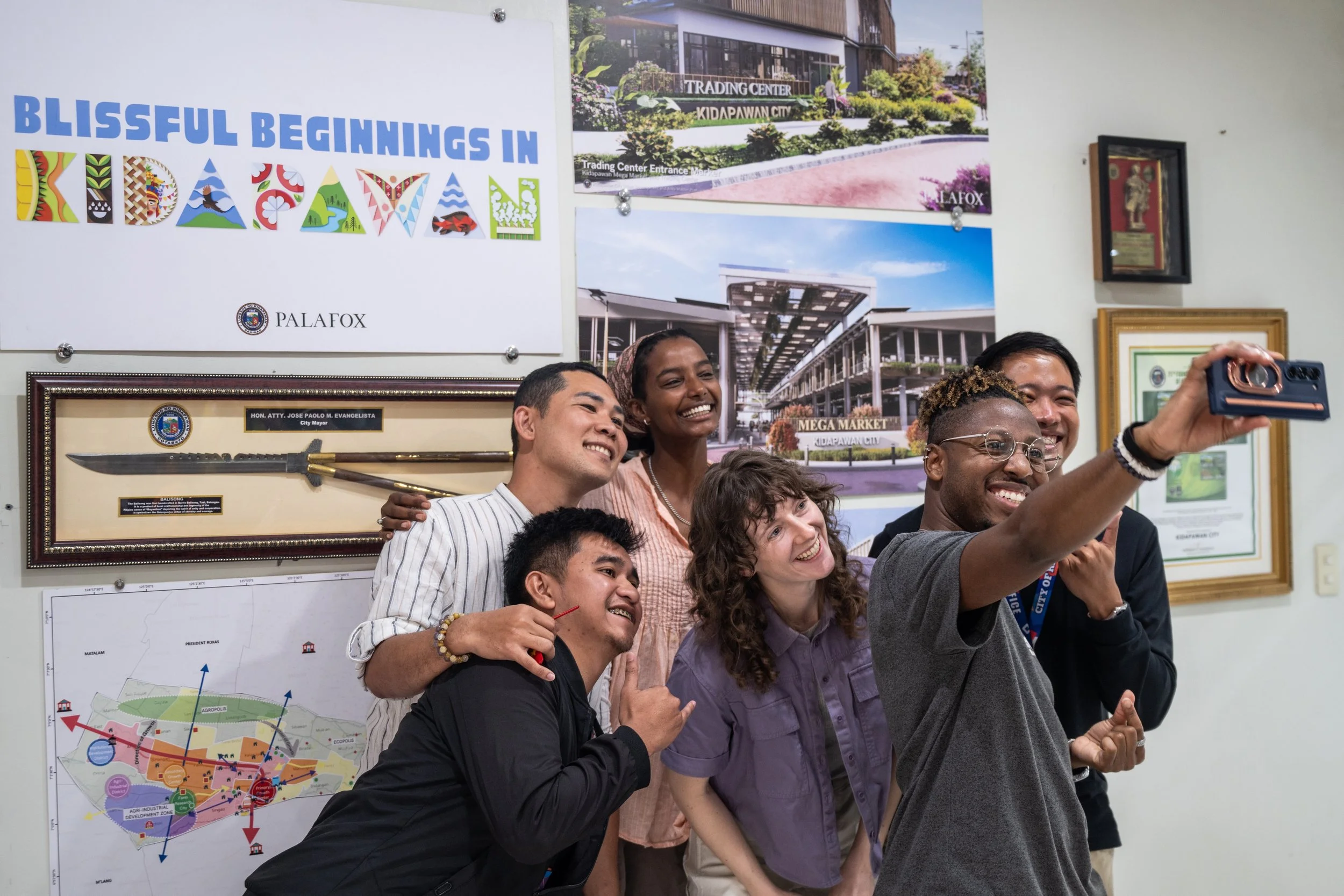
Traipsing through a mangrove forest on the island of Palawan, catching bees on the steppe of Mongolia, and catching giant hornets in Taiwan…it’s been a wild ride since I joined the Nat Geo Society, and I can’t wait to tell you all about it! Turns out we discovered a new species, which is pretty exciting. Get ready to hear about this and a lot more from my adventures. 😁✌🏾
The Secrets of the Bees
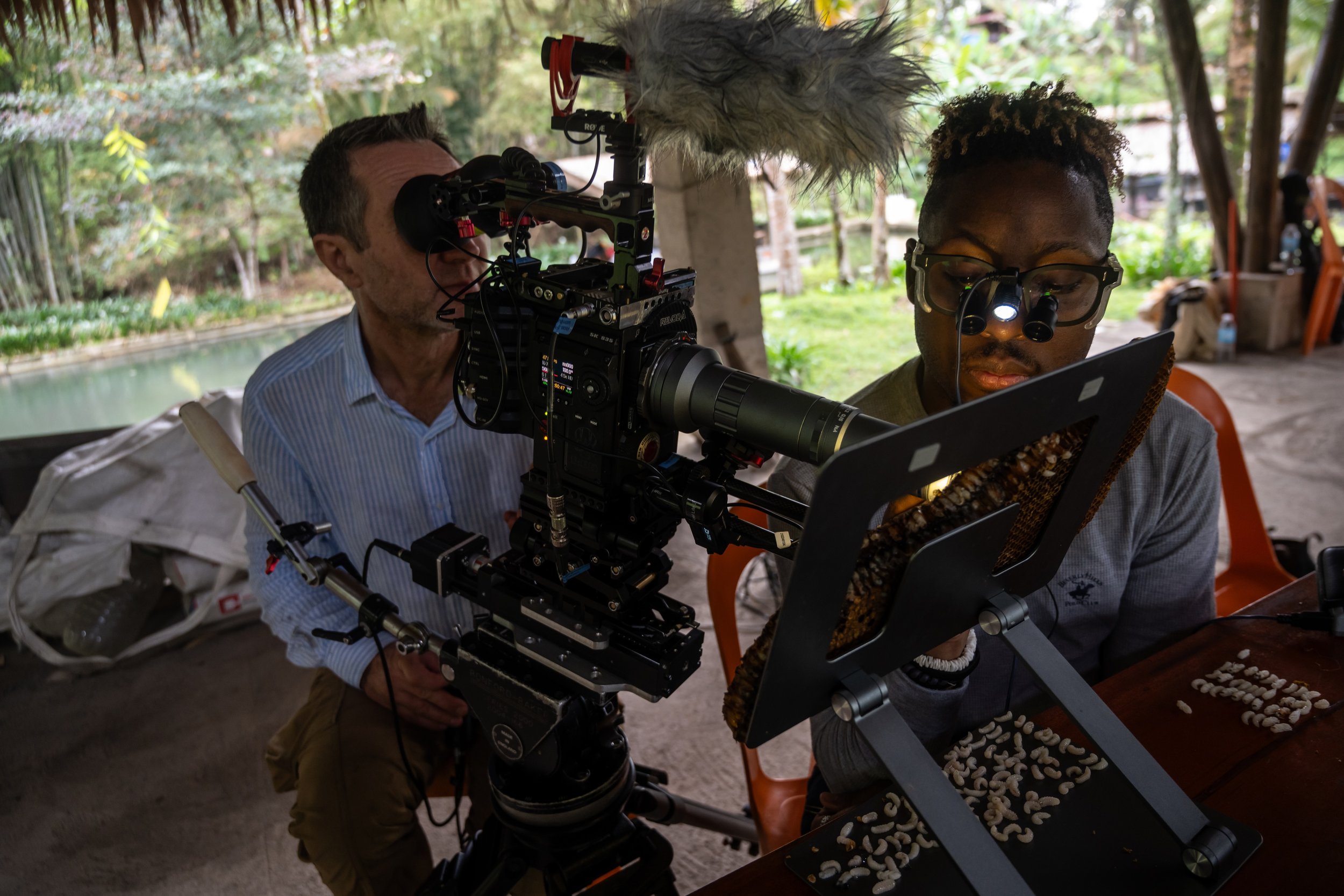
Honey bees are among the most studied animals on Earth, yet they still continue to surprise us. As a bee biologist and a producer of the award-winning Disney documentary Secrets of the Bees (directed by James Cameron), I’ll discuss some of our latest discoveries that reveal just how extraordinary honey bees really are. I’ll also take you behind the scenes of the making of this remarkable documentary, as I share how we captured—through breathtaking imagery and beautiful videography—the bees’ hidden stories.
Kleptocytosis: Varroa Mites Are Stealing From Your Bees! Here’s How We’ll Stop Them
Varroa mites would be nothing without bees. I mean that literally: In order to even be born into this world, their mothers have to steal the very yolk for their eggs from the bee’s fat body. It’s a crazy biological adaptation seen in no other parasite on the planet. Let’s talk about how it works, how we discovered it, and my lab’s groundbreaking research to disrupt the process…and stop the bees’ worst nightmare from ever being born.
Melting Mites: Can You Literally Melt Some of the World’s Most Destructive Parasites?
Turns out, you can! Join me as I take you to Jeju Island, South Korea, where my team is testing revolutionary new thermal technologies and charged amino acid treatments—tools designed to eliminate Tropilaelaps and Varroa mites before they devastate honey bee colonies. With this behind-the-scenes look at cutting-edge science, you’ll get a firsthand view of how bold ideas become real-world solutions.
America’s Most Unwanted: Why the U.S. Imports So Many Invasive Species, and What It Teaches Us About Risk
Every day, ships, planes, and cargo containers move millions of products around the globe. They also move something far less visible: living creatures. Surprisingly, the United States imports far more invasive species than it exports, making it one of the world’s largest receivers of biological hitchhikers. Why? In this eye-opening keynote, I’ll explore the hidden pathways that allow insects, pathogens, and other organisms to cross continents and reshape ecosystems…and threaten agriculture, infrastructure, and food security. Drawing on my lab’s research into global patterns of biological invasion, I’ll reveal why today’s interconnected economy creates an unintended “trade deficit” in invasive species, and how understanding these pathways can help us stop the next invasion before it begins.
Fresh Buzz From the Boulder Bee Lab
The Boulder Bee Lab researches everything from the impact of amitraz on bee viruses; to stingless bee biodiversity in the Amazon’s “Boiling River”; to the destructive capacity of Varroa spit and Tropi mites potentially living on rats, giant hornets, and a lot more! That’s one of the coolest things about having a lab with so many incredible researchers. Let me tell you all about our newest projects!
Tropi Mites: Where Are They Now, and What Are We Doing About It?
Tropi mites are still spreading around the world, and constantly gaining ground in new countries. My lab is working on a brand-new, state-of-the-art diagnostic system for these mites. We’re also working in South Korea to understand the Tropi lifecycle, why they leave colonies in the winter, and how to effectively kill them without hurting bees. Learn more about our progress to take the guesswork out of diagnosing Tropi outbreaks.
Bee Bolder: Embracing Adversity and Achieving Excellence
How did a little boy who was terrified of insects become an innovator in science and the study of insects? And on his remarkable journey, how did he overcome the naysayers who said he wasn’t doctoral candidate material, and even removed him from the program because he didn’t “look the part”? I’m no stranger to adversity, but I’ve never let that stop me from achieving my dreams time and again. I’ll share my story with you during this talk, and hopefully inspire you to continue working toward your own extraordinary goals.
Communicating Under Pressure and Uncertainty: The Skill That Ended a Pandemic 300 Years Ago
Effective communication—not force—has always been the decisive factor in large-scale change. During the smallpox pandemic of the 18th century, public health efforts initially failed not because of bad science, but because of poor communication and broken trust. When those failures were corrected, one of humanity’s deadliest diseases was eradicated. Today’s leaders face similar challenges: communicating complex information, earning trust amid uncertainty, and influencing behavior without appeals to authority. In this talk, I’ll draw from my knowledge of historical pandemics, modern science communication, and my own experience advising institutions at the highest levels (including the U.S. Supreme Court) to reveal what actually persuades people to listen, understand, and act.
Why Don’t Honey Bees Have More Parasites?
I’ve said it before, and I’ll say it again: bee hives are one of the best places on the planet to live! (They beat out every apartment I’ve ever lived in, hands down.) Central heating, meal delivery service, universal childcare, round-the-clock security detail…the Bee Comfy Apartment Complex should be super popular—but for some reason, honey bees don’t have nearly as many creatures living with them in their colonies as closely related social bees do. Let’s talk about why, and about how getting some new tenants might be what saves them.
The Honey Bee-Nome Project: Unlocking the Genome of All Honey Bees
You never know what you’ll find when you embark on a journey as ambitious as the one to chart the full genome of every honey bee species, along with their parasites and viruses. This work has painted a picture with unparalleled resolution of the honey bee community, helping us understand why some bees are stronger than others, how they thwart parasites, and how we can help them thrive. Learn more about our work in this talk!
Colony Collapse Disorder: What We’ve Learned in the Last 20 Years
Colony collapse disorder: Some thought it would be the end of beekeeping in America, but we made it! Let’s talk about what CCD might have been; why it disappeared; and why the bees are still dying, even without it.
The Global Bee Research Collective: Partnering With Indigenous Beekeepers To Prevent Future Pollinator Pandemics
What if we could predict disease spread in honey bees the way we do every year with the flu in people? I think we can! The Global Bee Research Collective (GBRC) was developed based on the same science guiding flu research at the CDC and WHO. Its primary partners include indigenous beekeepers throughout Southeast Asia, who sample bee disease and teach us how they’ve protected pollinators for thousands of years. I’ll share some of what they’ve taught me, and discuss the progress we’ve made in developing this system.
The Wrong Bees?
I’m sure you've heard it said that “you’re saving the wrong bees,” but what does that mean? Aren’t we all on the same side? You wouldn’t know it from the divisive rhetoric that’s taken hold in the bee community. Let’s talk about what the research actually says about the native bee vs. honey bee dynamic…because, as it turns out, there are no “wrong bees.”